As I introduced last week, the image of a three-legged stool sticks in my mind as we think about growing in our follower-ship of Jesus. We are called by Jesus, in our language, to be a community of Christ, sharing Christ with our communities. As we look into our future, we are exploring what we need to be engaged in as growing followers of Jesus, and as growing influences in our communities. As our statement suggests, we need a strong inner life (a community of Christ) in order to have an influential outer life (sharing Christ with our communities). Sunday, we’ll explore our inner life: loving God through worship, service, learning and prayer.
sermon: Love God (Deuteronomy 6:4-5, Mark 12:28-31 and Romans 12:1) with Rev. David Donaldson
A Strong Life Starts on the Inside
Think about a stool with three legs. If one leg is weak or missing, the whole thing wobbles. But when all three legs are strong, the stool is solid and steady.
Our lives are a bit like that. To live well, love others well and make a difference in the world, we first need a strong inner life. Everything we do on the outside grows out of what’s happening on the inside. That foundation is built on loving God well. And loving God isn’t just one thing; it’s made up of a few simple, everyday practices that help keep us grounded and growing.
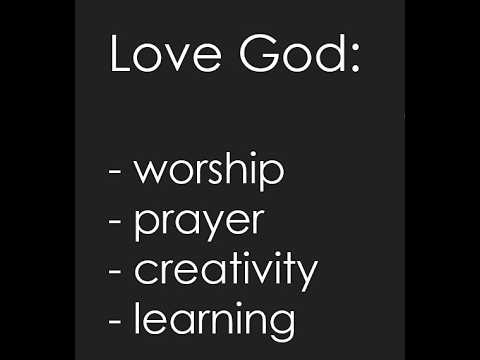
Here are four important ways we can love God and build that strong core inside.
1. Loving God Through Worship
When we hear the word worship, we often think of singing or gathering together. That is worship, but it’s only the beginning.
In the Bible, worship and everyday life are closely connected. Loving God means honoring Him not just with songs, but with how we live, work, and treat people.
Scripture says:
- “Fear the Lord your God, serve him only” (Deuteronomy 6:13)
- Jesus repeats this idea: “Worship the Lord your God, and serve him only” (Matthew 4:10)
That means what we do matters. How we act at home, at work, at school, or with neighbors can all be acts of worship.
Paul puts it this way: “Offer your bodies as a living sacrifice… this is your true and proper worship” (Romans 12:1)
In other words, everything we do can be worship when it’s done with love for God.
2. Loving God Through Prayer (and Listening)
Prayer isn’t just talking to God; it’s also learning to listen.
Many of us know how to ask God for help, say sorry, and give thanks. Those things matter. But it’s also important to be still and make space for silence.
Sometimes the most powerful prayer begins with a pause.
The Bible reminds us: “Be still, and know that I am God” (Psalm 46:10)
When we slow down, quiet our thoughts, and listen, we become more aware of God’s guidance. Prayer helps us stay connected, just like keeping our eyes on Jesus when life feels stormy (see Matthew 14:29–30).
3. Loving God Through Creativity
God is creative. Just look at sunsets, animals, flowers and the night sky! And because we are made in God’s image, creativity is part of being human.
Scripture tells us: “So God created mankind in his own image” (Genesis 1:27)
That means creativity isn’t extra—it’s part of who we are. We create when we cook meals, write, draw, garden, build, decorate, or make something more beautiful than it was before.
The Bible even says: “Sing to the Lord a new song” (Psalm 96:1)
Creating something new—just for the joy of it—can be a way of honoring God.
4. Loving God Through Learning
Learning about God helps us know Him better. That can happen through reading Scripture, studying deeply, or reflecting quietly.
But learning isn’t just about collecting facts. It’s about asking good questions, like:
- What did Jesus say?
- What did Jesus do?
- What does this mean for my life?
As Scripture says: “Love the Lord your God with all your heart… and with all your mind” (Matthew 22:37)
When learning leads to lived-out faith, it strengthens both us and the people around us.
Growing from the Inside Out
These practices—worship, prayer, creativity, and learning—help build a strong inner life. When our core is strong, what we do on the outside becomes more loving, meaningful, and fruitful.
A steady life doesn’t start with doing more. It starts with being rooted deeply—and letting everything else grow from there.