
In Kenya, when you approach a door of someone’s home, you call out, “Hodi!” which means, in effect, are you home? (literally, I believe it is the word for “knock.”) The typical response is “You are Most Welcome” (“Karibu Sana” in Swahili.) It is an expression of hospitality and, of course, you are invited to sit and tea is served. At its core, hospitality is “welcome in, have a seat, and here’s a cup of tea.” Whoever you are, you have a place here. Sharing tea — hospitality — is at once literal and metaphorical. We are told to share our food and even our ‘tables’ to others. And we are to do this as a metaphor (and even memory) of our welcome at God’s table.
In the context, then, of hospitality, we begin to build relationships and get the opportunity to share our food and faith.
And we remember that Jesus sat at a table with his disciples, and asks us to do the same: sit at the Table of Jesus, remember his sacrifice, and share his (and our) story with others.
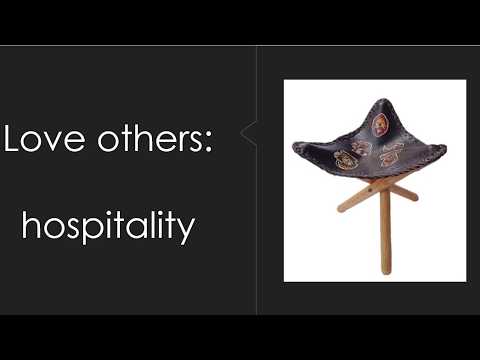
The Three Things That Help a Life Stay Steady
Imagine sitting on a stool with only one or two legs. You’d wobble. You might fall.
But a stool with three legs stays steady.
Life can work the same way.
When our lives are built on three strong loves, we tend to be more balanced, grounded, and resilient—even when things get hard.
Those three loves are:
- Loving God
- Loving other people
- Loving the world around us
Simple to say. Not always easy to live. But powerful.
Love That Points Us Upward
Loving God isn’t just about saying the right words. It’s about staying aware that we’re not the center of everything.
People love God in many ways:
- through music and creativity
- through learning and curiosity
- through quiet moments of prayer or reflection
- through noticing beauty in the world
When we keep loving God in view, life feels bigger than our stress, failures, or fears. It reminds us that meaning isn’t something we have to invent on our own.
Love That Reaches Outward
Loving others often looks ordinary. It doesn’t require special talent or perfect timing.
It can look like:
- welcoming people into your space
- sharing a meal
- listening without trying to fix someone
- noticing who feels left out
One of the simplest and strongest ways to love others is hospitality. That just means making room for people: friends and strangers.
Meals are especially powerful. Something about sitting at a table makes it easier to talk, listen, and be human together. Walls come down. Conversations deepen. Trust grows.
You don’t need a perfect house or fancy food. Sometimes hospitality looks like a big pot of chili and saying, “Come as you are.”
Love That Opens Our Hands
Loving the world around us means caring about more than just ourselves.
It starts with empathy—remembering what it feels like to be:
- new
- nervous
- overlooked
- unsure if you belong
Most of us have been the “odd one out” at some point. When we remember that feeling, it becomes easier to notice others who might need kindness, safety, or warmth.
This kind of love keeps our hands open instead of clenched. It leads us to ask, “How can I make space?” rather than “How can I protect what’s mine?”
Simple Doesn’t Mean Easy
Is this all too simple?
Yes and no.
The ideas are easy to understand. Living them every day is harder. Loving God, loving others, and loving the world requires choice, attention, and practice.
But when even one of these loves is missing, life can start to wobble.
When all three are present—even imperfectly—life tends to feel more stable, more meaningful, and more connected.
A Table With Room
Picture an open table.
No guest list. No performance. No pressure to impress.
Just room.
That image captures something important about the kind of love that holds a life steady. We’re invited into it, and we’re invited to invite others.
And that might be one of the simplest and strongest ways to live well.