You may have heard people say, “God is good.” Others might declare, “When I meet God face to face, I’ll have a few things to say.” But how does the goodness of God actually shape the world around us—and honestly, are we even capable of grasping it? Let’s take a closer look at Moses’s encounter with God and consider how his experience might shape ours.
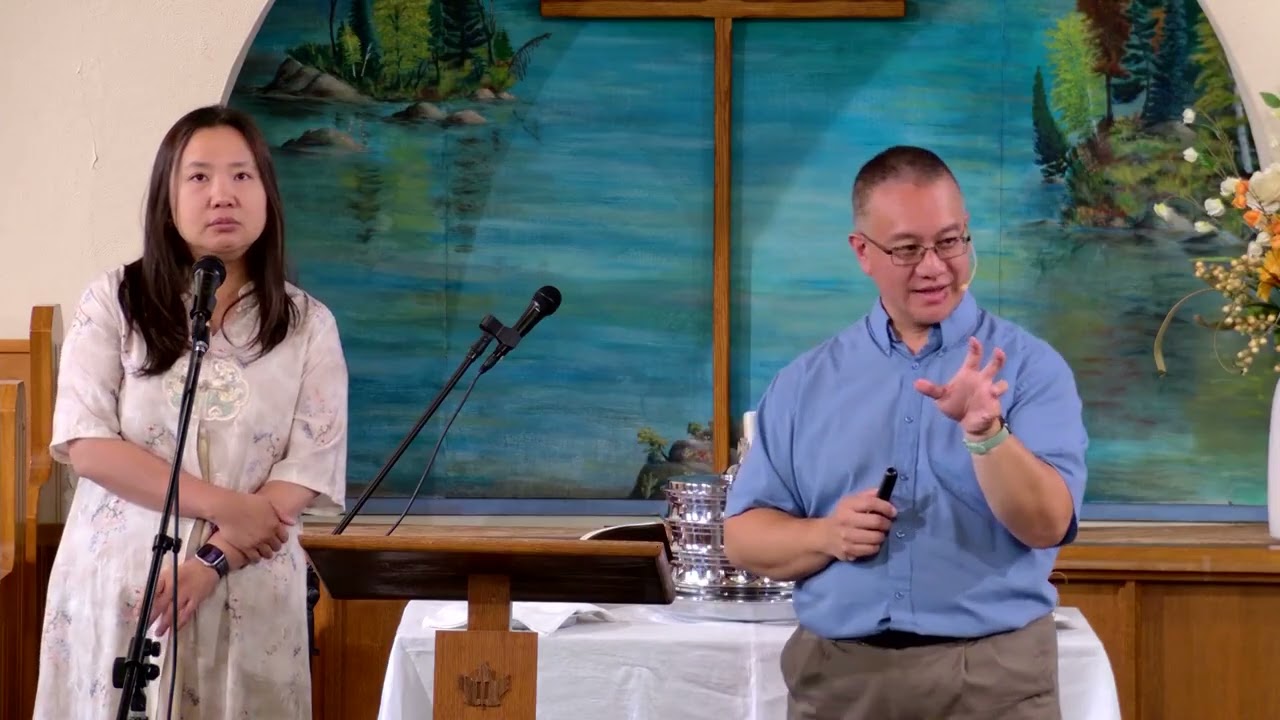
sermon: The Wake of Goodness passage (Exodus 33:19-23) with Rev. Alvin Lau
Experiencing the Wake of Goodness: Reflections from Exodus
We often talk about goodness. When asked to define it, we use words like “kindness” and “sharing”. These words, as good as they are, do not really define goodness.
In the book of Exodus, we encounter a powerful moment between Moses and God that reshapes our understanding of goodness. As God led the people of Israel out of Egypt to Mount Sinai and on the doorstep of the Promised Land, Moses pleads with Him not to leave them. He recognizes that it is God’s presence that sets them apart.
Moses asks to see God’s glorious presence, and God responds:
“I will make all my goodness pass before you.”
This phrase is profound. The Hebrew word for goodness, “טוּב (tub),” suggests something tangible—something that can be felt, seen, and experienced. It’s not just a concept; it’s a manifestation of mercy and compassion, as God continues:
“I will show mercy to anyone I choose. I will show compassion to anyone I choose.”
Yet, God also tells Moses that no one can look directly at His face and live. This isn’t about God hiding Himself—it’s about our sinfulness, our brokenness, that keeps us from experiencing the full intensity of divine glory. Instead, God places Moses in a cleft of a rock, covers him with His hand, and allows him to see His “back”—the aftereffects of His radiant glory.
This imagery is striking. It’s like seeing the trail of a shooting star, or the ripples behind a boat. We don’t see the source directly, but we witness its impact. We experience the wake of God’s goodness.
Hannes Oberholzer (Youth Programs & Media Coordinator at North Burlington Baptist Church) framed it beautifully:
“Good is not just an attribute of God. Goodness can only be found in God.”
This challenges us to rethink goodness—not as something we generate independently, but as something we receive from God and reflect to others. Goodness is not a parallel virtue to God’s character; it is inseparable from Him.
So this week, take a moment to notice the wake of God’s goodness in your life. It might be obvious—a moment of kindness, a breakthrough, a blessing. Or it might be subtle—a quiet peace, a gentle nudge, a reminder of hope.
Whether vivid or hidden, God’s goodness surrounds us. We just need to pause and look.